
If you are planning a road trip in Spain, one decision quietly shapes your budget, your car choice, and even how much fun you have behind the wheel: do you book an automatic or a manual? Most international visitors assume both options cost about the same and arrive in similar numbers at the rental desk. Neither is true. The Spanish rental market is built around manual gearboxes, and choosing the right transmission can save you 20 to 40 percent on the total price, or save your holiday from a stressful first day on unfamiliar roads.
This guide explains how the choice between automatic vs manual car rental Spain actually plays out at airports like Malaga, Alicante, Madrid and Barcelona, what you will pay in 2026, when each transmission makes sense, and exactly what to verify before you accept the keys. We also show a real price comparison table for the same car class with manual and automatic gearboxes, so you can see the gap in numbers rather than guesses.
Why the Choice Matters More in Spain Than at Home
In the United States, Canada, Australia and most of the UK, almost every rental car you ever drove was automatic. In Spain, the default is the opposite. Local drivers learn on manual cars, take their driving test on manual cars, and buy manual cars because they are cheaper to purchase, cheaper to insure and cheaper at the fuel pump. Rental fleets reflect that local reality.
According to industry data and the published inventories of major rental brands operating in Spain, manual transmission cars make up roughly 50 to 70 percent of available rental vehicles, depending on the location and supplier. Automatics typically sit between 20 and 40 percent of the fleet, and that share drops sharply in smaller cities and regional airports. The result is a simple market dynamic: limited supply meets very strong international demand, especially from American, Canadian and British tourists who do not feel safe on a stick shift.
Limited supply plus high demand pushes automatic rental prices up by 20 to 40 percent compared with the equivalent manual car. In peak summer weeks across the Costa Blanca, Costa del Sol and the Balearic Islands, the gap can stretch to 50 percent or more on the cheapest cars, and automatics can sell out two to three months in advance. Manual cars, on the other hand, are almost always available, even for last-minute walk-ups.
That is why the transmission decision is not just a comfort question. It is a budget question, an availability question and a planning question all at once.
The Real Price Gap: Manual vs Automatic in Spain
Numbers tell the story better than adjectives. The table below shows typical weekly rental prices for the same car class collected across Costa Blanca, Costa del Sol and Madrid for a one-week summer rental in 2026, comparing manual and automatic gearboxes on identical or near-identical models. Prices include basic insurance and unlimited mileage, but exclude fuel and optional extras.
| Car class | Example model | Manual (7 days) | Automatic (7 days) | Price difference |
|---|---|---|---|---|
| Mini | Fiat 500 / Kia Picanto | from 145 EUR | from 210 EUR | plus 45 percent |
| Economy | Renault Clio / Opel Corsa | from 175 EUR | from 245 EUR | plus 40 percent |
| Compact | Peugeot 308 / Opel Astra | from 215 EUR | from 290 EUR | plus 35 percent |
| Compact SUV | Peugeot 2008 / Renault Captur | from 260 EUR | from 345 EUR | plus 33 percent |
| Mid-size SUV | Nissan Qashqai / VW T-Cross | from 310 EUR | from 395 EUR | plus 27 percent |
| 7-seat MPV | Citroen Berlingo / Dacia Jogger | from 365 EUR | from 470 EUR | plus 29 percent |
| Premium | BMW 1 Series / Mercedes A-Class | from 410 EUR | from 495 EUR | plus 21 percent |
Two patterns stand out. First, the smaller the car, the bigger the percentage premium for automatic, because the manual baseline is so cheap that even a fixed automatic surcharge looks large. Second, on premium cars the gap narrows, because automatic is essentially the standard transmission in that segment in Europe, and supply is healthier. If you are renting a Mercedes E-Class, BMW 3 Series or any plug-in hybrid, the price difference between manual and automatic is often close to zero, simply because manual is barely offered.
You can see how the same logic plays out across categories in our own fleet on the WeOneRent car list: compact cars are the most common, MPVs and SUVs have fewer automatic units, and premium classes tend to be automatic by default.
When Manual Makes Sense (And Saves You Real Money)
If you grew up driving a stick shift and you still feel comfortable with one, manual is almost always the smarter choice in Spain. The savings are real, the choice is bigger, and you keep more flexibility for last-minute bookings or trip extensions.
Here are the situations where renting a manual makes clear sense:
- You drive manual at home. If you can comfortably do hill starts, parallel park in a tight street and shift smoothly without thinking, you will save hundreds of euros on a two-week holiday by choosing manual.
- You want maximum choice of cars. Manual fleets are deeper, especially in compact, economy and mini categories. You can pick exactly the model and color you want, even close to your travel date.
- Your trip is mostly motorway and open roads. Driving the AP-7 from Valencia to Alicante or the A-7 along the Costa del Sol is the easiest possible context for a manual gearbox. You shift up to fifth or sixth gear once and cruise. No stress, no constant gear changes.
- You want better fuel economy. Modern manuals still beat most automatics on real-world fuel consumption, often by 0.5 to 1 liter per 100 kilometers. Across a two-week road trip that is one full tank.
- You booked late. If you are looking for a car within two or three weeks of arrival in summer, automatics may be sold out across multiple suppliers. Manual is your fallback that actually works.
- You want a specific small car for narrow village streets. Mini and economy manuals dominate the smallest categories. If you need to park in the old town of Altea, Mijas or Sitges, the cheapest, smallest car you can find is almost always manual.
The savings compound. A typical family renting a compact car for 14 days saves around 150 EUR by choosing manual. That covers fuel for several days, a couple of tank tops of regional wine, or a nice family dinner with paella for four.
When Automatic Is Worth Every Extra Euro
That said, choosing automatic is sometimes not a luxury but a basic safety decision. Renting a manual you cannot confidently drive on unfamiliar roads, in a foreign language, with a tired family in the back, is a recipe for a stressful trip at best and an accident at worst.
Pay the premium and book an automatic if any of these apply to you:
- You have never driven a manual, or you learned years ago and never practiced. Spain is not the place to relearn. Traffic is faster than in many tourist countries, junctions are tighter and roundabouts are everywhere.
- You are flying in from the US or Canada. Most American drivers we serve at WeOneRent simply have no manual experience. Our car rental Spain for Americans guide goes deeper into this, but the short answer is: book automatic, book early, and do not be embarrassed about it.
- You will drive in the hills. The Costa Blanca interior, the Sierra Nevada, the Pyrenees, Ronda, Mijas Pueblo and many parts of inland Andalusia involve steep climbs, sharp hairpins and constant hill starts. With a stick shift, that means clutch fatigue and a real chance of rolling back on a slope. Automatic eliminates all of it.
- You are traveling with kids or pets. Drivers managing a manual on unfamiliar roads while toddlers cry and a dog moves in the back are dangerously distracted. Automatic frees up one of your hands and most of your brain.
- You will spend a lot of time in city traffic. Barcelona, Madrid, Valencia and Malaga all involve long stretches of stop-and-go driving in summer. Automatic transmission turns that from exhausting to almost pleasant.
- You plan to drive a plug-in hybrid or electric car. Almost all EVs and hybrids are automatic by design. If you want to test a Tesla Model 3, a Hyundai Kona Electric or a Toyota RAV4 hybrid in Spain, you are booking automatic whether you like it or not.
- One driver is recovering from an injury. Knee, ankle, hip or back issues make repeated clutch work painful. Automatic is the obvious medical choice.
If even one of these applies, do not try to save 70 EUR by gambling on a manual. Spend the difference and enjoy the trip.
Book Early: Automatic Supply Is Tighter Than You Think
The single most important piece of advice in this entire guide is this: if you want an automatic in Spain, book early. Not a week early, not two weeks early, but ideally two to four months before your travel dates if you are coming in summer or around Easter and Christmas.
The pattern repeats every year. From late April, automatic compact and economy cars start to disappear from the cheapest brokers. By mid-May, automatic mini and economy cars are nearly impossible to find in popular destinations like Malaga, Alicante and Palma de Mallorca for the peak July and August weeks. Even mid-range suppliers run out by early June. By the time you arrive at the airport, the only automatic options left are premium SUVs at three times the price you would have paid in March.
The same shortage hits at Christmas and Easter, plus the long Spanish bank holiday weekends (puentes) like 1 May, 15 August and the December bridge. Suppliers do not buy extra automatic cars just for peak weeks. The fleet size stays the same all year, only demand changes.
The practical lesson:
- If you know your dates, book automatic at least 8 to 12 weeks ahead for summer.
- If your trip falls in any school holiday, treat it as peak season and book the same way.
- If you cancel or change later, most flexible rates let you do so for free up to 24 or 48 hours before pick-up.
- If automatic is sold out on your preferred dates, consider shifting pick-up by one or two days, switching to a different airport, or going one car class up where supply is healthier.
Manual cars do not have this urgency. You can comfortably book a manual one or two weeks ahead even at the peak of summer. That alone is a strong reason to consider it if you are flexible.
What to Verify When You Confirm an Automatic Booking
This is the part most travelers skip, and the part that creates the most ugly surprises at the rental counter. Just because your reservation says "automatic" does not mean the contract guarantees one. Here is what to check before you click "Confirm" and again on the day of pick-up.
1. Read the transmission line on the confirmation, not just the icon. Many broker sites show a small gear icon next to a car. That icon is sometimes wrong. Open the full booking voucher and look for the actual text: "Transmission: Automatic". If it says "Manual or similar" or "Transmission may vary", you do not have a guaranteed automatic.
2. Check the words "or similar". Almost every rental contract reserves a car class, not a specific model. A guaranteed automatic in compact class is fine. A "Renault Clio Automatic or similar" booking sometimes ends up as a manual Peugeot 208 if the supplier runs out. Look for language like "guaranteed automatic transmission" or "automatic gearbox guaranteed in this category".
3. Confirm the fuel type if it matters. Many automatic cars in Spain are diesel or hybrid. If you are uncomfortable with diesel pump labels (gasoil) or worried about driving in low emission zones, verify the fuel type before paying.
4. Look at the deposit and the credit card requirements. Automatic cars are usually rented from larger international suppliers, who often require a higher security deposit (sometimes 1200 to 2000 EUR) and only accept credit cards in the main driver's name. Local Spanish brands tend to be more flexible.
5. Re-read the insurance. Damage to the clutch and gearbox is normally excluded from basic insurance. If you book a manual and do not feel confident, this is a hidden risk. Automatics remove the clutch-burn risk entirely.
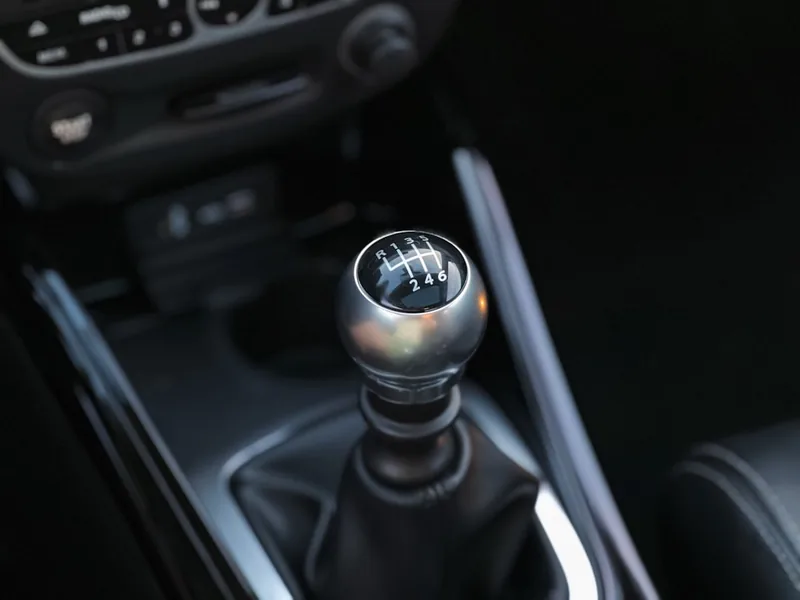
6. At pick-up, check the gear lever and the third pedal. Before you sign the contract, walk to the car. If there is a clutch pedal, it is a manual. If the lever shows P, R, N, D, you have an automatic. Sounds obvious, but tired travelers have driven away in the wrong car more than once. If the car is wrong, refuse it on the spot. The supplier must either provide the transmission you booked, refund the difference, or upgrade you for free.
For a deeper checklist on the whole pick-up process, including documents, deposit holds and fuel policy, our car rental Spain tips guide walks through every step.
Manual or Automatic in Specific Spanish Destinations
The right answer also depends on where exactly you are driving. A few regional notes:
Costa Blanca (Alicante, Benidorm, Calpe, Denia). The coast itself is mostly flat motorway driving along the AP-7 and N-332. Easy for manual. But anyone heading into Guadalest, the Sierra de Bernia or the back roads behind Altea will appreciate an automatic. Families staying in resorts and only doing one or two day trips can save money with manual.
Costa del Sol (Malaga, Marbella, Mijas, Ronda). The A-7 along the coast is easy. The drive up to Ronda or Mijas Pueblo is steep, twisty and includes long climbs in low gear. If your itinerary includes the white villages, book automatic.
Andalusia road trips (Seville, Cordoba, Granada). Mostly long motorway sections at constant speed, then careful city driving in old towns. Manual is fine for experienced drivers. Automatic makes the city sections much more relaxed.
Madrid and central Spain. Wide motorways, fast traffic, easy navigation outside the city. Manual works well unless you plan to spend a lot of time inside the M-30 ring road.
Barcelona and Catalonia. Heavy traffic in and around the city, a real low emission zone (ZBE Rondes), narrow streets in Gracia and the old town. Automatic is genuinely worth it here, especially if you will drive into the city center.
Mallorca, Ibiza and Tenerife. Island roads are short, often hilly and crowded in summer. Automatic supply is the tightest in the country here, with booking sometimes required four to six months ahead. Manual remains widely available.
How to Decide in 60 Seconds
If you are still on the fence, run through this quick mental checklist. Choose automatic if you check any one of these:
- You have not driven a manual in the last five years
- You are coming from the US, Canada or Australia and never owned a stick
- Your itinerary includes mountain roads, white villages or steep coastal climbs
- You will spend significant time in city traffic in Barcelona, Madrid or Valencia
- You are traveling with small children or pets in the car
- Anyone driving has a leg or back injury
- You are renting an electric or plug-in hybrid car
Choose manual if all of the following are true:
- You drive a manual regularly at home
- Your trip is mostly motorway with limited city or mountain driving
- You want the lowest possible price and the widest choice of models
- You are booking later than you should and automatics are scarce
Once you know which transmission you want, the next step is comparing the actual cars available for your dates. You can browse the WeOneRent fleet and filter by transmission, class and pick-up city on our our cars page, where every car listing clearly shows manual or automatic before you commit.
FAQ: Automatic vs Manual Car Rental in Spain
Is it cheaper to rent a manual or an automatic car in Spain?
Manual is almost always cheaper. The same car class in the same week typically costs 20 to 40 percent less with a manual transmission. On mini and economy cars in peak summer, the gap can reach 50 percent. On premium and electric cars, the gap shrinks to under 10 percent because automatic is the default in those segments.
Can I really get an automatic at any rental desk in Spain?
You can get an automatic at most major airports if you book in advance. Madrid, Barcelona, Malaga, Alicante and Palma have the deepest automatic fleets. Smaller airports and city downtown branches have far fewer automatic cars. Walking up without a reservation in summer is risky, and last-minute online booking often shows automatic as sold out.
How early should I book an automatic for summer in Spain?
For July and August, book 8 to 12 weeks ahead. For Easter and Christmas, book 6 to 10 weeks ahead. For long bank holiday weekends, book 4 to 6 weeks ahead. Outside peak periods, two weeks of notice is usually fine for popular destinations and one week is fine for less touristy regions.
Are automatic cars in Spain usually diesel or petrol?
Both are common, but automatic diesels are slightly more common in mid-size and larger classes because Spanish fleets historically favored diesel for longer rental cycles. Newer automatic cars are often hybrid or full-petrol. Always check the fuel type in your confirmation before refueling at the wrong pump.
What happens if I book a manual and cannot drive it once I arrive?
You can ask the rental supplier to swap the car for an automatic at the desk. If they have one available, they will charge you the difference for the remaining rental days, plus often an administrative fee. If they do not have an automatic available, you are stuck with the manual or with cancelling the rental. To avoid this, book automatic from the start if you have any doubt about your manual skills.
The Bottom Line
The choice between automatic and manual is one of the most underrated decisions in a Spanish car rental. Manual saves you 20 to 40 percent and gives you the widest possible choice of cars, but only if you are genuinely comfortable with a clutch on unfamiliar roads. Automatic costs more and needs to be booked weeks in advance, but it removes a huge amount of stress, especially for American drivers, families and anyone heading into Spain's beautiful hill country.
Whichever transmission you choose, book early, read the confirmation carefully, and verify the gear lever before you drive off the lot. Do those three things and the rest of your Spanish road trip will be a pleasure.
Ready to compare specific cars and prices for your dates? Browse the WeOneRent fleet and filter by transmission, location and dates to see exactly what is available, with transparent prices and no hidden fees.




%20(800%20x%20120%20px)%20(1600%20x%20200%20px).avif)