
Denia at a Glance: Port City, Castle Town, and Gateway to the Balearics
Denia sits in a sweet spot on the northern Costa Blanca where mountain meets sea, where Spanish gastronomy meets Mediterranean island ferries, and where a rental car turns a good holiday into a great one. If you are planning to rent a car in Denia, this guide will save you time, money, and the frustration of discovering too late that the bus to that turquoise cove only runs twice a day.
We will cover what Denia actually offers, why driving makes sense here more than almost anywhere else on the Costa Blanca, the best pickup options (including free delivery from Alicante airport), the routes that locals actually drive, and the practical rules you need to know before you turn the ignition.
Denia is a coastal town of roughly 45,000 residents in the Marina Alta region, halfway between Alicante and Valencia. It is one of those rare places that locals from Madrid and Valencia escape to in summer, which tells you something. Three things define it.
The first is the port. Denia's harbour is one of the most important ferry terminals on Spain's east coast, with daily Balearia crossings to Ibiza, Formentera, Palma de Mallorca, and seasonal connections beyond. The Eleanor Roosevelt fast ferry can have you on Ibizan sand in two hours flat. You can drive your rental car on board if your rental agreement permits ferry travel, which makes Denia a launchpad for multi-island trips that would otherwise require flights.
The second is the old town. Denia Castle, an 11th-century Moorish fortress, sits on a rocky hill over the centre. From the ramparts you see the curve of the bay, the Montgo mountain behind, and on clear days the silhouette of Ibiza to the east. Below the castle, the Marquesado quarter and the Calle Marques de Campo are full of seafood restaurants, tapas bars, and the kind of independent shops that Spanish coastal towns are slowly losing. Denia is also UNESCO's only Spanish city of gastronomy, which is not marketing; the red prawns from Denia bay are genuinely the best in the western Mediterranean.
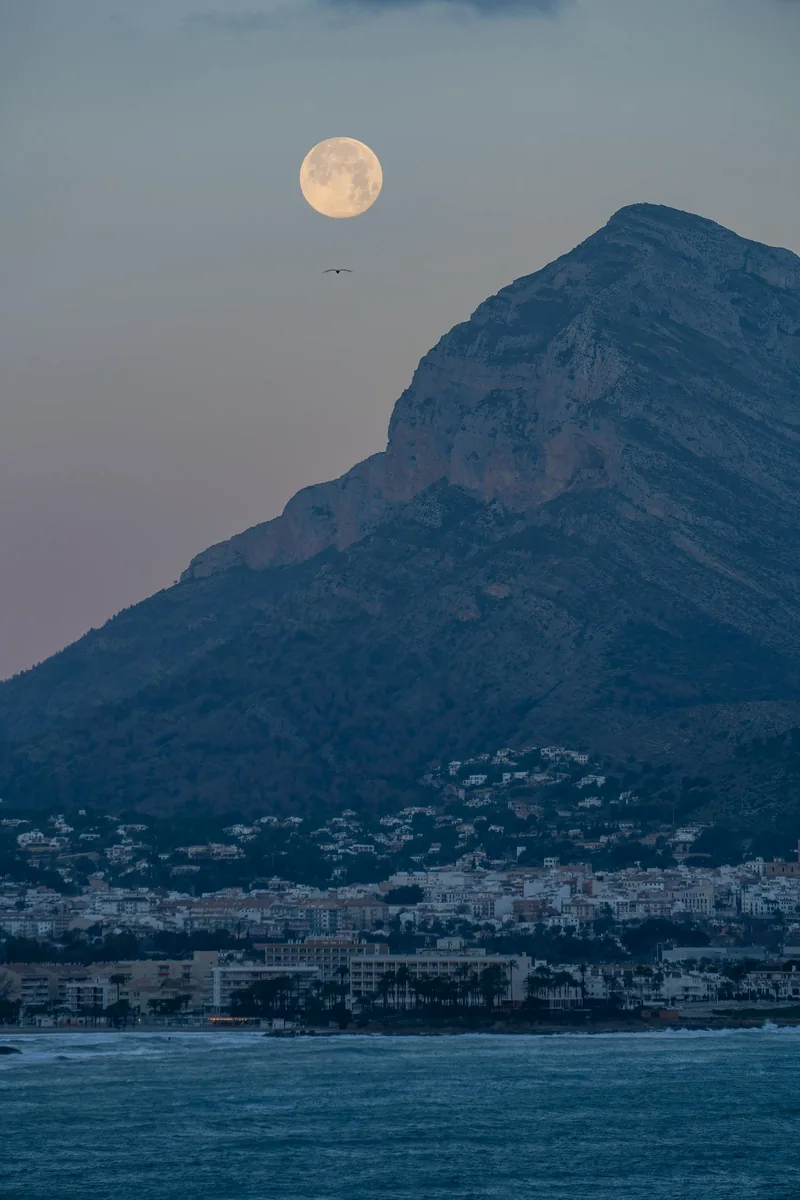
The third is the Montgo. This 753-metre limestone massif rises directly behind the town, a protected natural park since 1987, riddled with caves, eagle nests, and hiking trails. From the summit you see the entire northern Costa Blanca laid out beneath you. The Montgo separates Denia from Javea on its southern side, which is part of why these two towns, though only 10 kilometres apart, feel like different worlds.
Why You Actually Need a Rental Car in Denia
Public transport in Denia is workable for the town centre, but the moment you want to see the real Marina Alta region, it falls apart. Here is the honest picture.
Buses serve Denia, Javea, Calpe, and the airport, but schedules thin out dramatically outside summer peak. The TRAM Alicante light rail goes only as far north as Benidorm; from there you change to a regional bus. A return trip from Denia to a single inland village by public transport can eat an entire day.
The hidden beaches that make this stretch of coast famous, places like Cala del Moraig near Benitachell, Cala Granadella south of Javea, or the wild northern coves below the Cap de Sant Antoni lighthouse, have no bus service at all. They are accessed by narrow roads that twist down to small parking areas and then a short walk. Without a car, you simply do not see them.
The interior is the same story. The Jalon Valley with its almond blossoms in February, its bodegas, and its mountain restaurants is 20 minutes inland but feels like a different country. The villages of Orba, Parcent, and Tarbena are postcard Spain. Public transport to any of them is theoretical at best.
A rental car in Denia is not a luxury. It is the difference between seeing the surface and seeing the place.
If you want a wider picture of road trip planning in this region, our guide to the best road trips from Alicante covers itineraries that pair perfectly with a Denia base.
Pickup Options: Where and How to Collect Your Car
You have three realistic options for collecting a rental car when Denia is your destination. Each has trade-offs.
Option 1: Alicante Airport Pickup (Recommended for Most Travellers)
Alicante-Elche airport (ALC) is 100 kilometres south of Denia, roughly one hour by car on the AP-7 motorway. It is the largest airport in the region with the deepest selection of rental cars and the most competitive pricing. Almost every flight to the Costa Blanca lands here.
The drive from ALC to Denia is straightforward. You exit the airport, follow signs to the A-70 ring road, then join the AP-7 northbound (toll-free since 2020). Exit 62 puts you in Ondara, a short hop from Denia centre. The whole journey is one hour with normal traffic, longer in July and August Saturday peak.
We offer free delivery from Alicante airport to Denia for rentals of three days or more. That means you fly in, we meet you at Denia, and you skip the airport queues entirely. For families with luggage and tired kids, this is the difference between starting your holiday relaxed or starting it stressed.
Option 2: Valencia Airport Pickup
Valencia airport (VLC) is 110 kilometres north of Denia, also about an hour by car via the AP-7 southbound. If your flight schedules work better through Valencia, this is a perfectly viable alternative. The drive is similar in length, slightly less scenic, and Valencia airport tends to be less crowded than Alicante in peak season.
Option 3: Denia Pickup
You can collect a car directly in Denia, which makes sense if you are staying in town and want to rent only for specific excursions rather than the whole trip. Denia has a small selection of local rental offices clustered near the port and the train station. Inventory is thinner than at the airports, particularly in August, and prices for short rentals are not always lower than airport rates because of delivery and staffing overheads. Book ahead in summer.
For most visitors the answer is clear. Fly into Alicante, request airport delivery to Denia, and let someone else handle the logistics. See Alicante airport car rental options for full details on terminals, meeting points, and what to expect.
Best Routes to Drive from Denia
Denia's location makes it one of the best driving bases on the Spanish Mediterranean. Here are the routes that are genuinely worth your time, ordered roughly by distance.
Denia to Javea: 20 Minutes Over the Montgo
The drive from Denia to Javea is short but spectacular if you take the CV-736 over the Montgo's southern flank instead of the longer coastal road through Jesus Pobre. The CV-736 climbs through pine forest, passes the Montgo natural park entrance, and drops you into Javea with the Cap de Sant Antoni in front of you.
Javea (Xabia in Valencian) is split into three parts. The historic old town inland, the port quarter with its waterfront restaurants, and the Arenal beach with its long sandy crescent. South of Javea on the CV-740, you reach the Cap de la Nao headland and the access roads to Cala Granadella, a small pebble cove backed by pine cliffs that is regularly rated one of the most beautiful beaches in Spain. Parking is limited so arrive before 10am in summer.
Denia to Calpe and the Penon de Ifach: 45 Minutes Along the Coast
Continuing south from Javea, the road threads through Moraira (a quieter, upscale resort with its own old town and Wednesday market) and on to Calpe. The Penon de Ifach is unmistakable: a 332-metre limestone rock rising vertically from the sea, the unofficial symbol of the northern Costa Blanca. You can climb it on a marked trail that takes about two hours return; the views from the top across the bay and back towards Denia are reason enough to do the drive.
Denia to the Jalon Valley: 30 Minutes Inland
Take the CV-734 inland from Denia and within 30 minutes you are in a completely different landscape. The Jalon Valley (Vall de Pop in Valencian) is a fertile basin of vineyards, almond groves, and citrus, ringed by limestone mountains. The villages are small and unhurried. Jalon itself has a Saturday market in the dry riverbed that sells local wine, olive oil, and almonds. The bodegas of the Vall de Pop produce mistela and moscatel wines from grapes that have grown here for centuries.
The classic Jalon Valley loop continues to Parcent, then up the Coll de Rates mountain pass on the CV-715. The Coll de Rates restaurant at the top is a favourite Sunday lunch spot for locals, with a panorama that on clear days stretches to the Balearic Islands. From the col you descend to Tarbena, a mountain village famous for its sausage, then loop back via Castell de Castells.
In February the entire valley turns white with almond blossom. It is one of the best free spectacles in Spain and worth planning a trip around if you visit in winter.
Denia to Ibiza: 2 Hours by Ferry from Denia Port
This is the route that makes Denia genuinely unique. Balearia operates a year-round ferry service from Denia port to Ibiza, with the Eleanor Roosevelt fast ferry covering the crossing in around two hours. In summer there are typically two daily departures, a morning sailing around 08:30 or 09:00 arriving in Ibiza by late morning, and an afternoon departure around 17:00.
You can take your rental car on the ferry, but you need to check your rental agreement first. Not all companies permit ferry travel with their vehicles, and crossing to the Balearic Islands usually requires explicit written permission. If permitted, you avoid the cost of renting a second car in Ibiza and you have your own transport for exploring the island. Round-trip ferry fares with a car start around 177 euros depending on season; foot passenger fares start around 99 euros if you prefer to leave the car in Denia and pick up a rental on the island.
A day trip to Ibiza from Denia is technically possible but tight. Most visitors do at least one overnight to make the crossing worthwhile.
Denia to Valencia: 1 Hour 15 Minutes North
If you have time for a city day, Valencia is one hour and 15 minutes north on the AP-7. The City of Arts and Sciences, the historic centre, the Mercado Central, and an authentic paella lunch in El Palmar make for a packed but satisfying day. Park at one of the central garages and walk; Valencia's old town is compact.
What to Know Before You Drive in the Denia Area
A few practical points that will save you grief.
The AP-7 motorway along the Costa Blanca is now toll-free between Alicante and Valencia. This was the major Spanish coastal toll road until late 2020 and it remains one of the best things about driving in this region. Expect occasional congestion on summer weekends but no toll booths.
The N-332 is the original coastal road and runs parallel to the AP-7. It is slower, has more traffic lights, and passes through more towns, but it is also more scenic. If you have time, drive the AP-7 in one direction and the N-332 in the other.
Speed limits in Spain are 120 km/h on motorways, 90 km/h on conventional roads outside urban areas, and 50 km/h or less in built-up areas. Speed cameras are common and fines are issued automatically. The legal blood alcohol limit is 0.5 grams per litre for experienced drivers and 0.3 for drivers with less than two years of licence, lower than many other European countries.
Parking in Denia is generally fine outside the peak July and August weeks. The blue zones (zona azul) require a paid ticket from a meter during the day; white zones are free. Avoid yellow lines, which mean no parking at all. In summer the seafront and the area around the port fill up by mid-morning; arrive early or use one of the underground garages.
Denia and the surrounding municipalities do not currently operate low emission zones (ZBE) restricting access to older or non-resident vehicles, unlike Madrid or Barcelona. You can drive any vehicle into the centre. Valencia city, however, will introduce a low emission zone in central districts, so if you plan to drive into Valencia check the latest map of restricted zones before your trip.
Most rental cars in Spain are manual transmission by default. If you want an automatic you must specify this when booking and expect a price premium of 15 to 30 percent. Automatics are in shorter supply, particularly in smaller cities, so book early.
Fuel is cheaper at supermarket petrol stations (Mercadona, Carrefour) than at motorway service areas. Diesel is typically 10 to 20 cents cheaper per litre than petrol. Most rental contracts require you to return the car with the same fuel level you collected it with.
When to Visit Denia: Seasonal Notes for Drivers
Denia is open all year but each season has its character.
May and June are the sweet spot. Warm enough to swim, not yet crowded, prices reasonable, the Jalon Valley still green from spring rains. Rental car availability is wide and prices are around 20 to 30 percent below August peak.
July and August are peak season. Beaches are full, restaurants need reservations, and rental car prices roughly double. Book the car at least eight weeks ahead. The light is spectacular and the town has an unmistakable summer energy, but you will share it with several million other people.
September is many people's favourite month. The sea is at its warmest, schools are back so beaches empty out, and the major fiesta of Bous a la Mar (bulls in the sea) runs in the second week with the town in full party mode. Wine harvest in the Jalon Valley brings tastings and festivals.
October to April is the off-season. The town is quieter, restaurants stay open at weekends but some close midweek, and the weather is mild rather than hot. Rental prices drop to their lowest. February brings the almond blossom, March and April have ideal hiking weather on the Montgo. Winter is when this region reveals its other personality: a working Mediterranean town rather than a beach destination.
If you are visiting any time outside November to February, book your car early. The Costa Blanca is one of Europe's largest rental markets and inventory tightens fast around school holidays and bank holiday weekends in the UK, Germany, and Spain.
Choosing the Right Car for Your Denia Trip
The right car depends on what you plan to do.
- Small hatchback or supermini (Fiat 500, Renault Clio, Hyundai i10 class). Ideal for two people staying in Denia town and doing day trips along the coast. Easy to park, cheap to fuel, plenty of space for two suitcases.
- Compact car (VW Golf, Peugeot 308, Seat Leon class). Suits a family of four. More boot space for beach gear, more comfortable for longer drives to the Jalon Valley or Valencia.
- SUV. Makes sense if you are doing serious mountain driving on rough roads to remote coves, or if you are travelling with sports equipment. The Montgo natural park trails do not require off-road, but some access roads to the more remote beaches and inland villages are narrow and unmade.
- Convertible. A holiday-perfect choice for May to October. The CV-740 along the Cap de la Nao headland and the Coll de Rates mountain pass are made for open-top driving.
You can see our full fleet and book online at our cars page, with transparent pricing and no hidden surprises at pickup.
Frequently Asked Questions
How much does it cost to rent a car in Denia?
Prices vary by season and car category. In low season (November to March) you can rent a small economy car from around 25 to 35 euros per day. In high season (July and August) the same car typically costs 50 to 80 euros per day. SUVs and automatics carry a 20 to 40 percent premium. Booking eight or more weeks ahead in summer can save 30 percent versus walk-up rates.
Is it better to pick up a rental car in Alicante or Denia?
For most visitors, Alicante airport pickup is the better option because of wider car selection, more competitive pricing, and easier logistics if you are arriving by air. We offer free delivery from Alicante airport to Denia for rentals of three days or more, which gives you the price advantage of airport pickup without the inconvenience of driving from the airport with luggage.
Can I take a rental car on the ferry from Denia to Ibiza?
It depends on your rental agreement. Standard rental contracts in Spain often exclude travel to the Balearic Islands. You need explicit written permission from the rental company, and there is usually a supplementary fee for ferry travel. Ask before booking if you plan to take the car to Ibiza, Formentera, or Mallorca. If the option is not available, you can leave your rental in the Denia port long-stay parking and rent a separate car on the island.
Do I need an international driving permit to rent in Denia?
EU and EEA driving licences are accepted directly. UK licences issued after 1995 are also accepted without an IDP. Drivers from the United States, Canada, Australia, and most other non-EU countries should bring an International Driving Permit to accompany their national licence; the rental company may not require it in practice but Spanish police can ask to see one and fines are issued for not having it. The minimum age for car rental in Spain is generally 21, with a young driver surcharge under 25.
What documents do I need to rent a car in Denia?
You need a valid driving licence (held for at least one year, or two years for some vehicle categories), a passport or national ID card, and a credit card in the main driver's name for the security deposit. Debit cards are accepted by some companies but with restrictions; check before booking. The deposit can range from 200 to 1500 euros depending on car category.
Are there low emission zones in Denia I need to worry about?
No. Denia, Javea, Calpe, and the smaller towns of the Marina Alta do not currently operate low emission zones (ZBE) that restrict vehicle access. You can drive any vehicle into the centres. Valencia city does have ZBE plans in progress, so check the current restrictions if you plan a city day in Valencia. Madrid Central and Barcelona ZBE do not apply unless you drive to those cities.
The Bottom Line: Denia is a Driver's Town
Denia rewards visitors who get behind the wheel. The town itself is walkable and pleasant, but the real magic of this stretch of the Costa Blanca is in the coves, the mountain villages, the wine valleys, and the ferry port that connects the mainland to the Balearics. A rental car is the single best investment you can make in this holiday.
Pick up from Alicante airport for the best selection and prices, or let us deliver the car to you in Denia for free if you are staying three days or more. Book early for summer, choose the right car for your plans, and you will see a Spain that day-trippers and bus travellers simply do not reach.
Ready to drive? Browse our cars, pick the one that fits your trip, and we will handle the rest.




%20(800%20x%20120%20px)%20(1600%20x%20200%20px).avif)